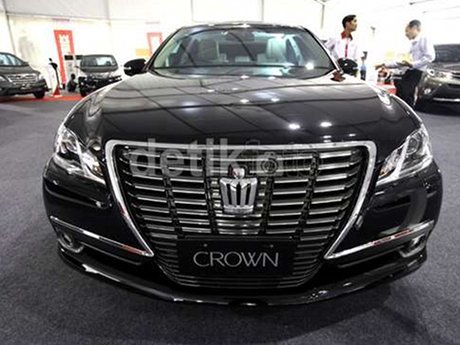
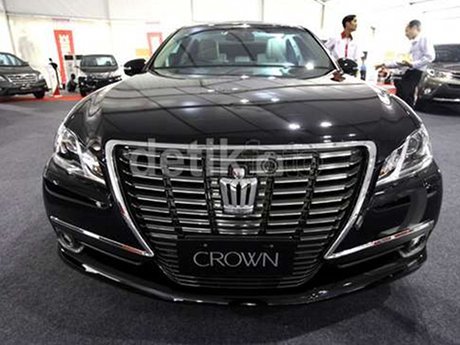
Jika anda lihat di pameran Toyota Expo yang digelar di Jakarta beberapa waktu lalu, ada mobil menteri Toyota Crown Royal Saloon model terbaru. Mobil menteri ini terlihat lebih sangar dengan grille yang besar. Siap menjual untuk umum?
"Untuk Toyota Crown Royal Saloon saya lihat harganya enggak kompetitif. Lebih mahal dari kompetitor," ujar salah seorang sumber di Toyota saat dihubungi detikOto, Minggu (28/12/2014).Menurutnya, mobil yang sempat dipinjamkan untuk mobil dinas Menko Perekonomian Sofyan Djalil itu tidak disebar untuk masyarakat umum. Soalnya, banderol harga sedan ini masih cukup tinggi.Di Indonesia, Crown Royal Saloon terbaru yang diproduksi 2013 lalu itu dibanderol Rp 1,8 miliaran. Harga itu berbeda sekitar Rp 500 jutaan dari Crown versi sebelumnya."Harganya cukup tinggi, Rp 1,8 miliar. Masyarakat enggak worthed lah dengan harga segitu. Kecuali untuk dipakai instansi pemerintah," kata sumber.Menurutnya, Toyota hanya menghadirkan enam unit Crown Royal Saloon ke Indonesia. Salah satu dari enam unit itu digunakan di internal Toyota. Sementara beberapa unit lainnya telah digunakan di instansi pemerintah Indonesia.
Tahun ini, penarikan mobil mencapai rekor tertingginya. Jumlah mobil yang ditarik di Amerika tahun ini mencapai dua kali lipat lebih dibanding 2004 lalu, yakni 60 juta unit lebih. Mobil yang paling banyak ditarik buatan General Motors. 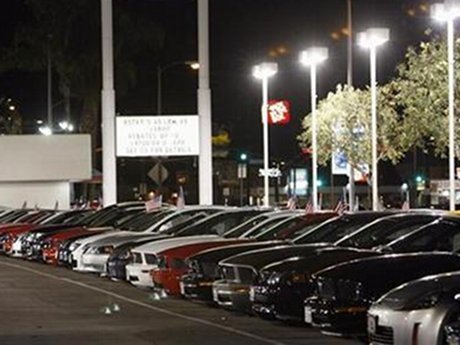 Data Lembaga Keselamatan Lalu-lintas Jalan Raya Nasional (NHTSA) Amerika Serikat yang dilansir Carbuzz, menyebutkan penarikan mobil di Amerika disebabkan berbagai hal. "Saklar pengapian yang bermasalah, airbag yang mengembang tak semestinya dan serpihan pecahan berpotensi melukai penumpang dan sopir, dan lain-lain," tulis laman itu.Total jumlah mobil yang ditarik hingga kini masih terus bertambah. Soalnya, sejumlah merek atau pabrikan juga terus memperluas penarikan mobil buatannya dengan berbagai alasan penyebab.Namun hingga pertengahan Desember, jumlah mobil yang ditarik mencapai 60,5 juta unit lebih. Sementara pada 2004, jumlah mobil yang ditarik mencapai 30.800.000 unit.Dari jumlah tersebut, mobil besutan General Motors paling banyak ditarik yakni 27 juta unit karena saklar pengapian atau kunci kontak. Sementara Honda Motors menarik 5,4 juta unit, dan kemudian Fiat Chrysler, dan pabrikan atau merek lainnya.
Toyota Crown Royal Saloon terbaru memiliki beberapa perbedaan dengan model terdahulunya. Selain tampangnya, kapasitas mesinnya juga diturunkan menjadi 2.500 cc. Meski begitu, harga Crown Royal Saloon terbaru justru lebih mahal dibandingkan versi sebelumnya.
"Fiturnya kalau kayak electric seat itu masih sama. Enggak jauh beda sama yang lama. CC-nya aja yang beda. Yang baru 2.500. Kalau yang lama 3.000," kata sumber detikOto di Toyota yang enggan disebutkan namanya.Untuk harga, Toyota Crown terbaru lebih mahal Rp 500 jutaan dengan versi terdahulunya. Untuk Crown Royal Saloon terbaru di Indonesia dibanderol Rp 1,8 miliaran. Sementara versi lamanya hanya Rp 1,3 miliar."Yang lama harganya Rp 1,3 miliar. Enggak tahu lah, program perpajakannya yang mengharuskan kayak gitu," ujar sumber.Menteri di bawah Kabinet Kerja tidak menggunakan mobil Toyota Crown Royal Saloon terbaru.Menurutnya, mobil dinas menteri masih menggunakan Toyota Crown lama. Meski beberapa waktu ini Menko Perekonomian Sofyan Djalil mengendarai Crown model baru. Sofyan memakai mobil baru sebagai pengganti sementara mobil Crown lama yang tengah diservis."Enggak dipakai menteri, Jokowi kan masih pakai mobil kabinet lama. Jadi masih pakai Crown dulu," tegasnya.Toyota memasukkan enam unit Crown Royal Saloon terbaru ke Indonesia. Namun, enam unit itu tidak dijual kepada masyarakat umum."Kemarin enggak dijual umum. Kita cuma masukin enam unit. Karena model lama udah enggak keluar jadi kita masukin model baru. Satu dipakai internal kita, beberapa dipakai instansi pemerintah, kemarin OJK atau apa itu saya lupa," katanya.
-Pada ajang Guangzhou Auto Show 2014 yang diselenggarakan November lalu, produsen mobil asal Korea, KIA memamerkan mobil konsep yang bernama KX3. Adik dari Sorento ini belum lama kejepret kamera tanpa sedikitpun adanya kamuflase.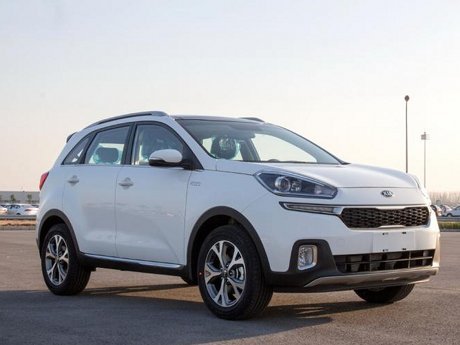 Dilansir laman Worldcarfans dari Autohome, Senin (29/12/2014) KIA KX3 ini tertangkap kamera disalah satu tempat parkir lingkungan pabrik. Dari foto tersebut terlihat desainnya mirip dengan mobil KIA yang lainnya.KIA memastikan adik dari Sorento ini hanya akan di pasarkan untuk Tiongkok dan rencananya akan diluncurkan pada Maret 2015 mendatang. Untuk memproduksinya, KIA menggandeng pabrikan lokal yakni Donfeng-Yueda.Jantung pacunya sendiri masih belum bisa dipastikan, Tapi dikabarkan akan ditawarkan 2 pilihan mesin. Salah satunya adalah mesin 1.6-liter naturally aspirated yang mampu menghasilkan tenaga 123 hp dan torsi 151 Nm.Mesin tersebut akan dikawinkan dengan transmisi manual 6 percepatan atau otomatis 6 percepatan dan untuk varian turbo akan dilengkapi dengan DCT bertrasmisi 7 percepatan.
Pabrikan mobil mewah asal Italia, Maserati, dikabarkan tengah menyiapkan varian Sport Utility Vehicle anyar dengan menggunakan basis milik Fiat-Chrysler. Mobil sport serbaguna yang dinamai Maserati Levante itu disebut-sebut bakal diluncurkan di Frankfurt Motor Show, September 2015.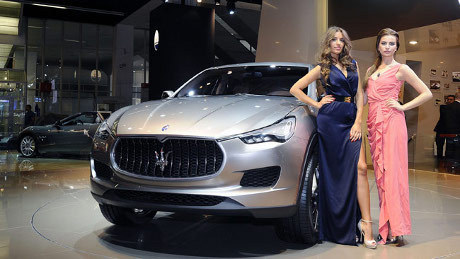 Seperti dilansir Car Advice, Senin (29/12/2014), sumber di pabrikan itu mengatakan, mobil itu menggunakan basis milik Fiat-Chrysler, meski tak disebut model apa yang menjadi dasarnya. Sementara untuk sistem penggerak rodanya – baik empat penggerak roda maupun dua roda depan – menggunakan platform Giorgio.Soal mesin belum ada informasi apapun. Namun, yang pasti, pabrikan itu dikenal memiliki beberapa varian mesin tangguh. Mereka adalah mesin V6 generasi anyar yang mampu menyemburkan tenaga hingga 368 kW lebih, mesin V8 bertenaga lebih dari 412 kW, serta mesin diesel dengan tenaga 250 kW. Agen Pemegang Merek (APM) Maserati di Indonesia PT Auto Trisula Indonesia memastikan akan ikut memperkenalkan mobil ini di Indonesia.Levante sendiri merupakan SUV pertama Maserati yang dalam bentuk konsepnya bernama Kubang. Konsep tersebut telah dipamerkan Maserati pada 2011 lalu.Dari sisi nama, Levante, dalam bahasa Italia berarti 'Timur'. Nama ini dipilih Maserati untuk menghormati sejarah Maserati. Di 1919, Maserati memindahkan perusahaannya ke fasilitas yang lebih luas di Emilia Levante, di Bologna.Mobil ini merupakan satu dari tiga model yang disiapkan Maserati untuk meningkatkan penjualan total mereka secara global dari 6.300 unit di tahun 2012 menjadi 50.000 unit di 2015 mendatang.
Bekerja sama dengan Universitas Desain, Teknik, dan Bisnis di Pforzheim, produsen ban Hankook Tire memperkenalkan Boostrac, Alpike dan Hyblade. Ban futuristik ini diklaim sanggup mengatasi berbagai perubahan iklim.
Dengan menggunakan 3 ban ini, mobil mampu beradaptasi dengan perubahan iklim seperti di gurun pasir, salju tebal, dan hujan lebat.Boostrac memiliki tapak dengan blok berbentuk heksagonal yang bisa berubah menjadi lebih lebar, sehingga menghasilkan kinerja traksi yang maksimal – khususnya pada kondisi jalan yang curam dan berat, seperti; gurun pasir dan jalanan di pegunungan. Alpike dirancang memiliki mode lingkar ban yang dapat membesar,sehingga jarak antara bodi kendaraan dan permukaan jalan akan semakin jauh, optimal dan cocok untuk kondisi jalan bersalju tebal. Selain itu, tapak dan jarak antar tread yang terjadi karena ban yang membesar akan meningkatkan traksi pada jalan bersalju dan berlapis es tipis. HyBlade dirancang untuk memberikan solusi yang optimal saat menghadapihujan deras – dilengkapi dengan tapak dengan saluran air air dan sisi jari-jari yang membuat performa ban maksimal disaat hujan deras."Ketiga konsep tersebut diperkenalkan dan dipamerkan di Essen Motors Show 2014 di Jerman, salah satu ajang pameran otomotif dan modifikasi terbesar di dunia," tulis Hankook dalam pernyataannya, Senin (29/12/2014).
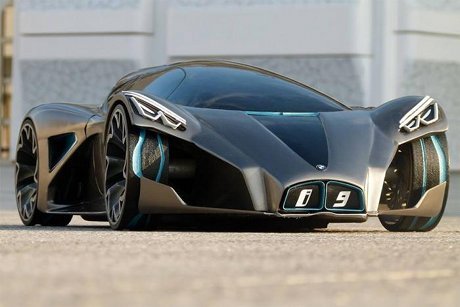
Kabar mengenai BMW tengah mempersiapkan hypercar hybrid sudah terdengar sejak beberapa waktu lalu. Hypercar itu diberi nama i9 yang rencananya akan diluncurkan BMW pada tahun 2016 mendatang atau saat BMW menginjak usia ke-100 tahun.
Dilansir laman Worldcarfans dari BMWblog.com, Senin (29/12/2014) tampilannya mulai terkuak melalui gambar-gambar render digital. Dari gambar yang tersebar bisa dilihat BMW i9 itu memiliki tampang yang futuristik bahkan dibandingkan dengan i8, hypercar i9 memiliki desain yang cukup liar.Kabarnya, hypercar hybrid penantang Ferrari LaFerrari, Porsche 918 Spyder dan McLaren P1 ini sumber tenagangnya akan diambil berdasarkan BMW i8.Tapi kalau BMW i8 dibekali mesin 1.5 liter 3 silinder turbocharged, dan motor listrik, jantung pacu i9 akan menggendong mesin 3.0-liter, 6 silinder.Mesin tersebut dikawinkan degan motor listrik yang lebih besar sehingga mampu memberikan kontribusi tenaga yang lebih besar ketimbang i8. Sehingga, untuk berakselerasi 0-100 km/jam harus mencapai kurang dari 4 detik.